Not sure how to express YOUR love to family, friends, or a romantic partner en español?
In this lesson, you’ll learn different ways to say “I love you” in Spanish depending on who you’re talking to and the type of relationship you have.
You’ll discover:
❤️ Different verbs to express love en español
💌 Romantic phrases to surprise your loved one in Spanish
🥰 Common vocabulary related to love
Ready? ¡Vamos!
Your First Confident Steps en Español
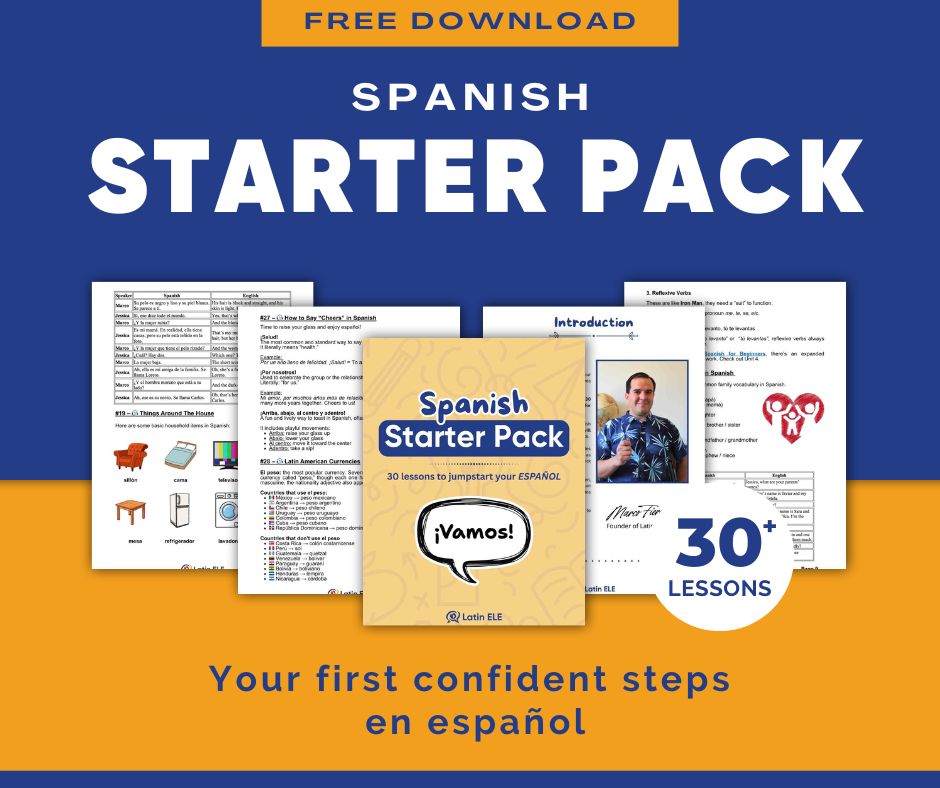
Get your FREE Spanish Starter Pack, 30 beginner lessons for a solid start en español.
Ebook + audio lessons included.
Unsubscribe anytime.
Te quiero
This phrase means “I love you”, but NOT necessarily in a romantic way.
The verb querer expresses affection and love, and it’s commonly used among close friends and family members.
Examples:
- Los niños quieren a sus padres. (Children love their parents.)
- Yo quiero mucho a mis amigos. (I love my friends very much.)
So saying te quiero is appropriate for people you know well, but not for someone you just met.
If you say te quiero on a first date, the other person might feel things are moving too fast. Save it for when there’s already trust and connection.
Me gustas
Unlike te quiero, which can be friendly or affectionate, me gustas in Spanish usually means “I have a crush on you.”
The verb gustar normally means “to like” for objects or activities, but when used with a person, it often expresses romantic attraction.
So be careful!
To avoid confusion, Spanish speakers use caer bien, which clearly means you like someone in a friendly way.
Examples:
- Me gustas. (I have a crush on you.)
- Me caes muy bien. (I really like you. Friendly.)
Te amo
This is the classic expression of romantic love.
Te amo is stronger and more intimate than te quiero.
Use the verb amar with your soulmate or romantic partner. It’s also common to say it to very close family members, like parents or grandparents.
But saying it to your cousin or a casual acquaintance would feel… unusual.
Examples:
- Te amo. Eres el amor de mi vida. (I love you. You’re the love of my life.)
- María ama a sus padres (María loves her parents)
More Words to Express Love in Spanish
The verbs gustar, querer, and amar are only part of the love vocabulary. Here are more common expressions related to amor:
Eres mi media naranja: You’re my significant other. (Literally “my half orange.”)
Cariño: A sweet word like “honey.” The good news: it works for any gender.
Te quiero con todo mi corazón: Adding corazón (heart) makes te quiero sound more romantic.
Corazón: Literally “heart,” used as a term of endearment.
Te adoro: I adore you. How romantic!
Estoy loco/loca por ti: I’m crazy about you.
¿Quieres ser mi novio/novia?: Do you want to be my boyfriend/girlfriend?
Tengo el corazón roto: My heart is broken. (If things don’t go well…)
And that’s it for this lesson!
Now that you know many different ways to say “I love you” in Spanish, go out there and spread el amor in the language of love: el español.
¡Viva el amor!
Need More Spanish Beginner Lessons?
If you’re starting your journey en español, our show Spanish for Beginners with Marco is the perfect place to begin.
This podcast offers clear, accessible lessons designed for English speakers.
Grammar is taught in meaningful, real‑life contexts so you can apply what you learn right away.
Available on all major listening apps.