
If you’ve recently started learning Spanish, by now you probably know to how say “hola” and “chao”.
But to have more meaningful conversations with your latino “amigos”, you need to keep moving forward.
In this entry, you will learn how to introduce yourself in your first interactions with our podcast Speaking Spanish for Beginners. ¡Vamos!
Your First Confident Steps en Español
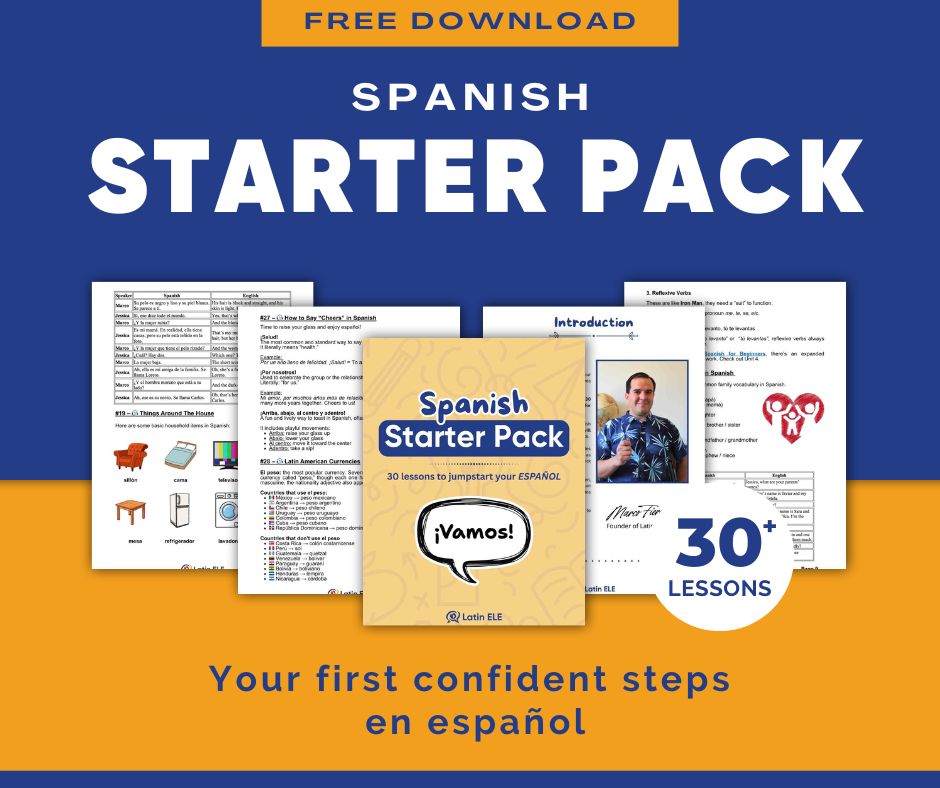
Get your FREE Spanish Starter Pack, 30 beginner lessons for a solid start en español.
Ebook + audio lessons included.
Unsubscribe anytime.
Introducing Yourself in Spanish
Giving and Asking Information about Name
In order to say “my name is….”, we use the verb llamarse in Spanish. So when you introduce yourself, you can say: Me llamo + your name (my name is…)
Another option is using the verb ser (to be): soy + your name (I’m…)
In order to ask about a person’s name, you can use the question ¿cómo te llamas? (What’s your name?)
Nice to Meet You!
The follow-up phrase, after you have exchanged names, is “nice to meet you”. You can say mucho gusto to express this idea.
There are some other alternatives. But hey! No need to rush. Keep it simple for now and start having fun in Spanish!
Dialogue Transcript
Before you read this, listen to the episode above and see how much you can understand without the transcript. Then come back to this section to check what the characters said in the conversation.
Marco: Hola, me llamo Marco, ¿y tú?
Jessica: Hola, mucho gusto. Me llamo Jessica.
Marco: ¿Cómo estás?
Jessica: Muy bien, ¿y tú?
Marco: Bien, gracias.
First Interaction in a Formal Situation
There are some special considerations you need to keep in mind if you are in a formal setting. This episode will give more details. Below you will find the audio of the listening activity.
Dialogue Transcript
Ana: Buenas tardes.
Roberto: Buenas tardes.
Ana: Me presento, soy Ana Jimenez. La madre de Sofía.
Roberto: Encantado. Yo soy Roberto Ortega, el director de la escuela
Ana: ¿Cómo está usted?
Roberto: Bien, muchas gracias. ¿y usted?
Ana: Muy bien. Gracias.
Need More Spanish Beginner Lessons?
If you’re starting your journey en español, our show Spanish for Beginners with Marco is the perfect place to begin.
This podcast offers clear, accessible lessons designed for English speakers.
Grammar is taught in meaningful, real‑life contexts so you can apply what you learn right away.
Available on all major listening apps.