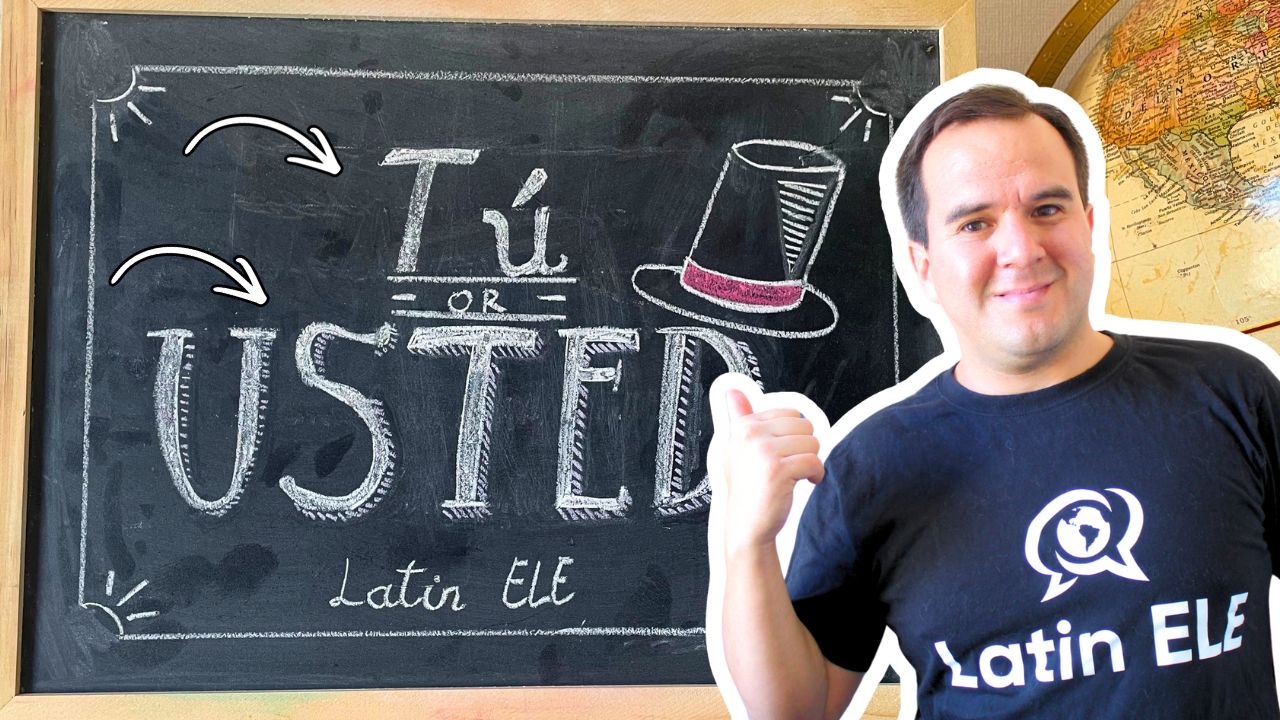
The main difference between tú and usted in Spanish is the level of formality.
Tú is the informal second-person singular pronoun used with friends, family members, peers, and children.
Usted is the formal second-person singular pronoun used to show respect when speaking to older adults, authority figures, strangers, and in professional business settings.
Both pronouns translate to “you” in English, but they require different verb conjugations.
Not sure when to use each one? This video lesson breaks down the essentials for Spanish beginners. ¡Vamos!
Your First Confident Steps en Español
Get your FREE Spanish Starter Pack, 30 beginner lessons for a solid start en español.
Ebook + audio lessons included.
Unsubscribe anytime.
What Is the Difference Between Tú and Usted?
In the Spanish-speaking world, forms of address reflect social distance and respect:
- Tú (Informal pronoun): Used in informal situations to shorten social distance and create immediate warmth and familiarity.
- Usted (Formal pronoun): Used in formal situations to show respect, maintain polite professional boundaries, and address people formally.
| Pronoun | Formality Level | When to Use It | Example Sentence |
|---|---|---|---|
| Tú | Informal | Friends, classmates, coworkers your age, kids | ¡Hola, Marco! ¿Cómo estás? |
| Usted | Formal | Doctors, clients, teachers, older people | Buenos días, señor Fierro. ¿Cómo está? |
When to Use Tú in Everyday Spanish
You should use tú whenever you are talking to someone you consider an equal or when the social setting is casual:
- Talking to friends, family members, and siblings.
- Chatting with colleagues of the same rank or age.
- When a native speaker tells you: “Puedes tutearme” (You can use tú with me).
When to Use Usted to Show Respect
You should use usted in formal settings or when you want to establish a polite, respectful tone:
- Addressing the elderly or older adults you do not know well.
- Speaking to professionals in service settings (doctors, lawyers, police officers, bank tellers).
- When you are unsure of the appropriate level of formality (defaulting to usted is always safe).
How Verb Conjugation Changes with Tú vs. Usted
Changing between tú and usted directly alters your verb conjugation. In regular present tense verbs, the informal tú form ends in -s, while the formal usted form drops the -s:
- Trabajar (to work):
- Tú trabajas (You work – informal)
- Usted trabaja (You work – formal)
- Aprender (to learn):
- Tú aprendes (You learn – informal)
- Usted aprende (You learn – formal)
- Vivir (to live):
- Tú vives (You live – informal)
- Usted vive (You live – formal)
In common greetings, this grammatical distinction is essential:
- ¿Cómo estás? uses the tú conjugation for casual settings.
- ¿Cómo está? uses the usted conjugation for formal interactions.
Tú vs. Ustedes: How to Address Multiple People in Spanish
When addressing a group of people, the rules depend on geography:
- In Latin American Spanish: Ustedes is the only plural pronoun used to address groups of people, regardless of whether the situation is formal or informal.
- In Spain: European Spanish uses vosotros for informal plural groups and ustedes for formal plural groups.
☝️ Note on Latin America: In countries like Argentina and Uruguay, native speakers frequently use vos instead of tú for informal conversations.
If you’re traveling there, you can read our breakdown of the Spanish pronoun vos here
Practice Quiz: Choose Between Tú and Usted
Test your understanding with these common scenarios:
- Ordering a coffee from a barista your age
- Speaking to a police officer asking for street directions
- Meeting a travel friend at a hostel
- Greeting your partner’s grandmother at dinner
Answers & Explanations
- Tú: Casual setting with someone of your same age group.
- Usted: A formal setting to show respect to a police officer.
- Tú: Ideal for making new friends in a casual travel setting.
- Usted: The polite, respectful way to address older family members.
And now that you know when to use each pronoun, it’s time to start practicing with your Spanish-speaking friends!
Whether you find yourself in an informal or formal situation, you now know exactly how to address a person en españolwith clarity and respect.
Keep taking small steps in the Spanish language and enjoy the process.
¡Hasta la próxima!
Keep Building Your Spanish Foundations
Ready for the next step? Explore our core beginner guides.
- 💬Introducing Yourself in Spanish
- 🔢 How to Say Your Phone Number in Spanish
- 📅 Days of the Week in Spanish
- 🗣️ Physical Descriptions in Spanish
- ✍️ Spanish Regular Verbs in the Present Tense
- 📝 Practice the Spanish Present Tense
- ⏰ How to Tell Time in Spanish
- 👍Talking about likes and dislikes with Gustar
Need extra help to get started en español? Get your FREE Spanish Starter Pack and start building confidence in everyday Spanish conversations.