
What are your amigos like? Would you be able to describe someone physically if asked?
Whether it’s for an online dating profile or even describing a crime suspect 😅, this basic skill comes in handy when you’re learning Spanish.
In this episode of Spanish for Beginners Podcast, you’ll learn the essential words to describe physical characteristics en español.
Ready? ¡Vamos!
Your First Confident Steps en Español
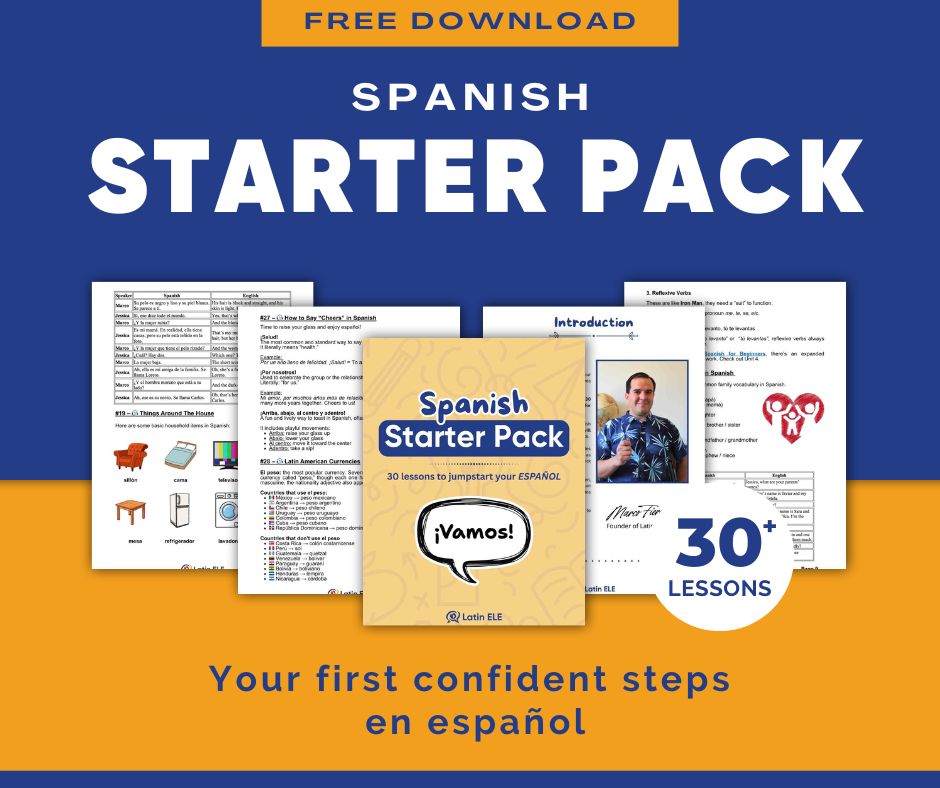
Get your FREE Spanish Starter Pack, 30 beginner lessons for a solid start en español.
Ebook + audio lessons included.
Unsubscribe anytime.
Describing Height
One of the most noticeable features of a person is their height. Here are two common adjectives:
Alto/-a = tall → Mi tío es alto (My uncle is tall)
Bajo/-a = short → Mi amiga es baja (My friend is short)
Notice that in both cases we use the verb ser before the adjective.
What about someone in between? You can say:
Ni alto, ni bajo (not tall, not short)
De estatura media (medium height)
Hair Color
In Spanish, hair is el pelo. Here’s some useful vocabulary:
Rubio = blonde
Castaño = brown (commonly for hair; otherwise, brown = marrón)
Moreno = brunette
Negro = black
Teñido = dyed
Liso = straight
Rizado = curly
For gray hair, there’s a specific word: canas.
And if the person has no hair, use calvo/-a (bald).
Example: El esposo de María es calvo. (María’s husband is bald)
Eye color
Eyes in Spanish are los ojos. To describe eye color, say:
Ojos azules = blue eyes
Ojos verdes = green eyes
Ojos marrones = brown eyes
Ojos negros = black eyes

Skin Color
Skin in Spanish is “piel.” here are some possible ways to describe the color of “la piel.”
Piel blanca = light/white skin
Piel morena = brown/dark skin
Piel negra = black skin
Spanish Physical Descriptions in Context
Now that you know the vocabulary, Now that you know the vocabulary, here’s a transcript from the episode:
Two amigos talk about their family members using physical descriptions in Spanish.
| Spanish | English |
|---|---|
| Jessica: Hola, Marco. ¿Cómo va todo? | Jessica: Hi, Marco. How’s everything going? |
| Marco: Bien, ¿y tú? ¿Qué tal? | Marco: Good, and you? How are you? |
| Jessica: Todo bien, gracias. Acá en Facebook, viendo algunas fotos de mi familia. | Jessica: All good, thanks. I’m here on Facebook, looking at some photos of my family. |
| Marco: A ver, ¿quién es el hombre alto de la foto? | Marco: Let’s see, who’s the tall man in the photo? |
| Jessica: Ese es mi tío Luis. | Jessica: That’s my uncle Luis. |
| Marco: Su pelo es negro y liso y su piel blanca. Se parece a ti. | Marco: His hair is black and straight and has light skin. He looks like you. |
| Jessica: Sí, eso dice todo el mundo. | Jessica: Yes, that’s what everyone says. |
| Marco: ¿Y la mujer rubia? | Marco: And the blonde woman? |
| Jessica: Es mi mamá. En realidad, ella tiene canas, pero su pelo está teñido en la foto. | Jessica: That’s my mom. Actually, she has gray hair, but it’s dyed in the photo. |
| Marco: ¿Y la mujer que tiene el pelo rizado? | Marco: And the woman with curly hair? |
| Jessica: ¿Cuál? Hay dos. | Jessica: Which one? There are two. |
| Marco: La mujer baja. | Marco: The short woman. |
| Jessica: Ah, ella es mi amiga de la familia. Se llama Loreto. | Jessica: Oh, she’s a family friend. Her name is Loreto. |
| Marco: ¿Y el hombre moreno que está a su lado? | Marco: And the brown man next to her? |
| Jessica: Ah, ese es su novio. Se llama Carlos. | Jessica: Oh, that’s her boyfriend. His name is Carlos. |
Let’s Practice!
Ready to put your skills to the test? Try this quiz to practice how to describe people in Spanish.
Now that you know how to describe physical appearance, go out there and practice using these descriptions to talk about your amigos en español.
And if you need more resources to get started in Spanish with confidence, you’ll find useful resources listed below.
¡Hasta pronto!
Build Your Spanish Foundations
Starting your Spanish journey? These Spanish beginner lessons may help:
- 👋 Spanish for Beginners
- 💬Introducing Yourself in Spanish
- 🔢 How to Say Your Phone Number in Spanish
- 📅 Days of the Week in Spanish
- ✍️ Spanish Regular Verbs in the Present Tense
- 📝 Practice the Spanish Present Tense
- ⏰ How to Tell Time in Spanish
- 👍Talking about likes and dislikes with Gustar
And if you’d like extra support, get your FREE Spanish Starter Pack and start building confidence in everyday Spanish conversations.