
“Mañana” means tomorrow and morning in Spanish. So… how do you say tomorrow morning?
That’s the question I got from a student in one of my lessons. And to answer it, I recorded this episode of the Spanish Quickie podcast.
Short, fun, and slightly cheeky Spanish lessons for beginners.
Your First Confident Steps en Español
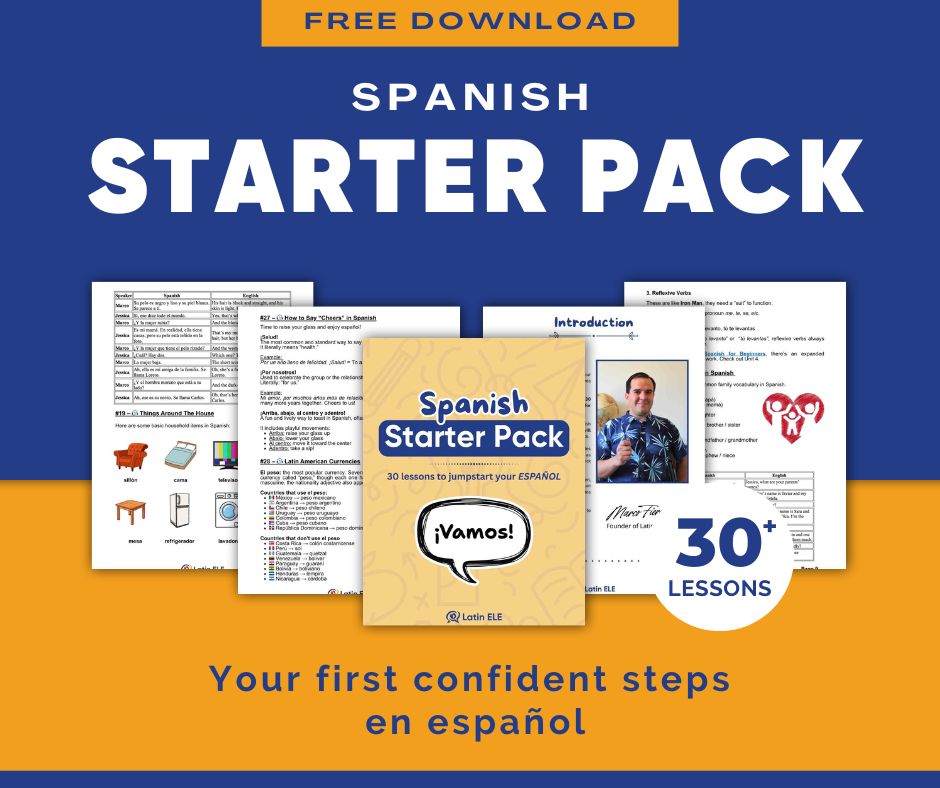
Get your FREE Spanish Starter Pack, 30 beginner lessons for a solid start en español.
Ebook + audio lessons included.
Unsubscribe anytime.
“Mañana” means “tomorrow”
Let’s look at an example:
Mi mamá llega mañana = My mom arrives tomorrow
In this sentence, mañana refers to the day after today. When mañana means “tomorrow,” it usually stands alone, no article like el or la.
The placement is flexible too. I could say:
Mañana llega mi mamá, putting mañana at the beginning. Same meaning.
In either case, it’s just mañana, no extra words attached.
“Mañana” means “morning”
Yep, it can be confusing. But when Spanish speakers mean “morning,” they say la mañana.
Example:
Mi mamá llega por la mañana = My mom arrives in the morning
Notice the difference? The phrase por la mañana includes the article la.
That’s how we make the distinction. Not just mañana, but la mañana.
So… how do you say “tomorrow morning” in Spanish?
Easy! It’s mañana por la mañana.
We rely on the presence or absence of the article la to tell the difference.
A small detail, but it makes a big difference!
Hope you enjoyed this quick lesson!
And if you want to keep learning, get your first five Spanish lessons FREE with Spanish Kickstart.
¡Hasta pronto!

Marco Fierro—Your Latino Spanish Tutor
¡Hola! I’m an enthusiastic Spanish teacher passionate about making my language accessible to YOU.
When I’m not teaching, I love traveling and rocking out on my electric guitar.
Let’s have fun learning ESPAÑOL together. ¡Vamos!