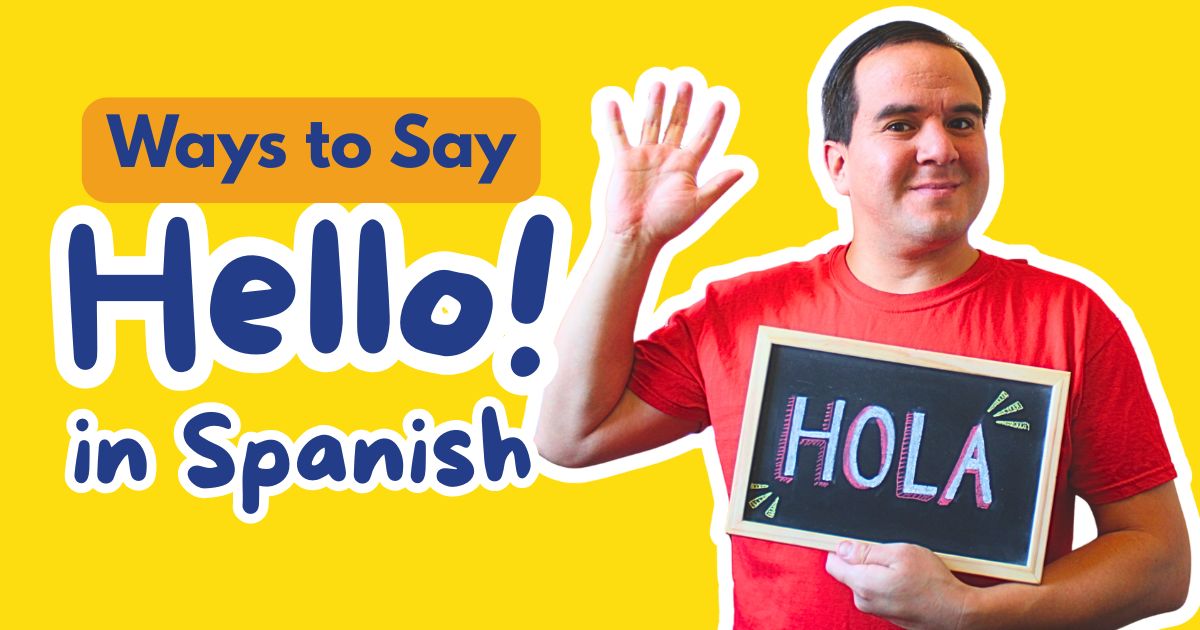
Not sure how to greet your amigos en español? In this guide, you’ll learn different ways to say “hi” in Spanish.
From the classic hola to more natural greetings used throughout the Spanish‑speaking world.
You’ll discover:
💬 Alternatives to the standard “hola”
☀️ Greetings for different parts of the day
🎩 Formal vs. informal greetings
✅ Examples you can start using right away
Ready? ¡Vamos!
Your First Confident Steps en Español
Get your FREE Spanish Starter Pack, 30 beginner lessons for a solid start en español.
Ebook + audio lessons included.
Unsubscribe anytime.
Ways to Say “Hi” in Spanish
The most common way to say hi in Spanish is:
Hola: Hi / Hello
It works in almost any situation, from casual to neutral to polite.
It’s often followed by a friendly question:
¿Cómo estás?: How are you?
¿Qué tal?: How’s it going?
¿Cómo te va?: How’s everything going?
For very informal situations with close friends, you might hear:
¿Qué hubo?: What’s up? (very colloquial)
All of these are perfect for casual, everyday interactions.
You can hear many of these greetings in this video.
Spanish Greetings for Different Parts of the Day
Spanish also has greetings tied to the time of day. These work as “hello” in many contexts:
Buenos días: Good morning
Buenas tardes: Good afternoon
Buenas noches: Good evening / Good night
These expressions tend to sound a bit more formal, especially among friends who usually prefer casual greetings like hola or ¿qué tal?.
A very common informal alternative is simply:
¡Buenas!: Hey! / Hi!
This drops the time of day completely and works in most everyday situations.
¿Cómo estás? vs. ¿Cómo está?
Spanish marks formality through the pronouns tú and usted.
Both mean you (singular), but:
tú = informal
usted = formal / polite
This affects the verb conjugation, so:
Hola, ¿cómo estás? → informal (using tú)
Hola, ¿cómo está? → formal (using usted)
You’ll hear usted in business settings, with older people, or when showing respect.
Tú is used with friends, family, and people your age.
Need More Spanish Beginner Lessons?
If you’re starting your journey en español, our show Spanish for Beginners with Marco is the perfect place to begin.
This podcast offers clear, accessible lessons designed for English speakers.
Grammar is taught in meaningful, real‑life contexts so you can apply what you learn right away.
Available on all major listening apps.