So, you’ve decided to learn Spanish — That’s exciting!.
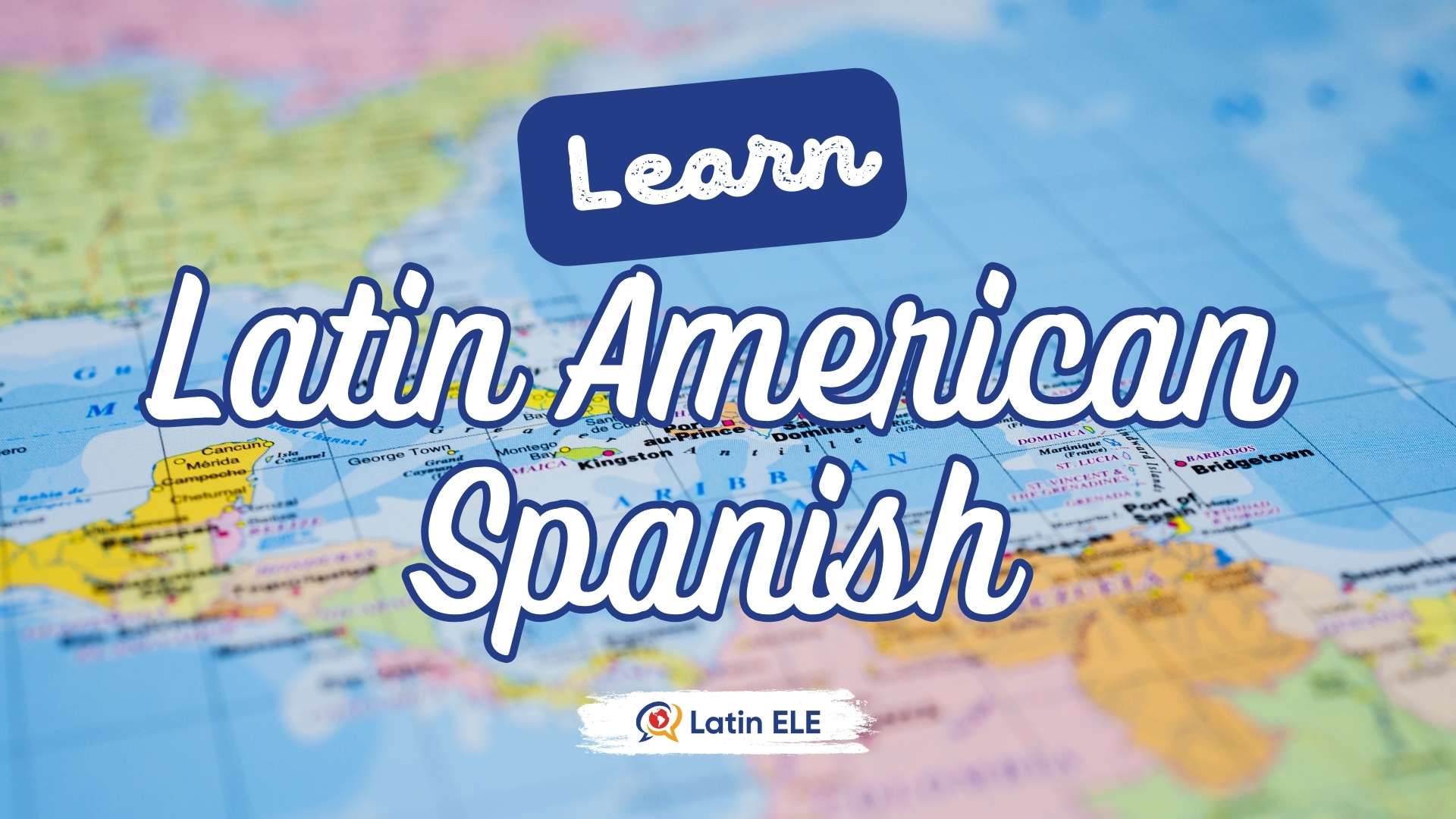
As you begin your journey, you’ll likely hear about two main variations: European and Latin American Spanish.
But… which one should you choose?
If you’re planning to visit Latin America, where about 90% of native Spanish speakers live, the choice is clear!
🌎 Latin American Spanish is your ticket to connecting with most Spanish-speaking countries.
In this blog, you’ll discover what makes Latin American Spanish unique.
¡Vamos!
Join our FREE 5-Day Spanish Course!
Ready to start learning Spanish but not sure where to begin?
Subscribe to Latin ELE’s newsletter and get access to Spanish Kickstart—a 5-day course with videos, study guides, and daily tips to help you start strong.
Unsubscribe anytime. No hard feelings
Second Person Plural Pronouns
This is one of the most NOTICEABLE differences between Latin American and European Spanish.
In Latin America, when addressing a group as “you,” we use ustedes.
However, in Spain, there are two options: vosotros (informal) and ustedes (formal).
In Latin America, there’s no such distinction. We only use ustedes.
Why is this important? Well, vosotros and ustedes require different conjugations.
For example:
- ¿Qué hacen los fines de semana? (ustedes)
- ¿Qué hacéis los fines de semana? (vosotros)
(Translation: What do you do on weekends?)
If you’re focusing on Latin American Spanish, that’s one less conjugation to learn. Phew!
The Seseo
In Latin America, the letters s, c (before e or i), and z are all pronounced like the English s (as in safe). This is called seseo.
In Spain, however, they distinguish between these sounds. The pronunciation of c and z is like the English th (as in think).
For example:
- Latinos say ser-ka for cerca (close).
- Spaniards say ther-ka.
Keep in mind that some regions of Spain, like the Canary Islands and southern areas, also use seseo.
Influence of Indigenous Words
Latin American Spanish is rich with words borrowed from indigenous languages, thanks to centuries of cultural blending.
Here are a few examples:
- Carpa (tent) – From Quechua, commonly used in South America. In Spain, it’s tienda de campaña.
- Cahuín (gossip) – From Mapudungun, used in Chile. In Spain, it’s cotilleo.
- Macurca (muscle pain after exercise) – From Quechua, used in Bolivia. In Spain, they simply say dolor físico luego de ejercitar.
Yeísmo
In Latin America, the letters y and ll are pronounced the same: like the English y in yellow.
In Spain, these are pronounced like the English j in jab.
For example:
- Latinos say beya for bella (beautiful).
- Spaniards say beja.
Resources to Learn Latin American Spanish
Want to dive deeper into Latin American Spanish? Check out these amazing resources by Latino creators.
A great way to familiarize yourself with the Spanish language as it is spoken in the Americas.
Podcasts
Speaking Spanish for Beginners
Hosted by Marco Fierro from Chile, this podcast is a perfect starting point for learning Spanish and building vocabulary.
Spanish for Beginners
Joel Zárate from México offers a structured journey through Spanish, with modules that gradually increase in difficulty.
Español con Latin ELE
Ideal for intermediate learners, this podcast features interviews with guests from all over Latin America. Perfect for hearing diverse accents!
YouTube Channels
Hola Spanish
Created by teacher Brenda Romaniello from Argentina, this channel covers grammar, listening, and cultural tips for all levels.
Aprende Español con WhyNotSpanish
María from Colombia and Cody from the U.S. make learning Spanish fun with grammar games, cultural vlogs, and interviews.
Final Thoughts
Now you have a general idea of what to expect when learning Latin American Spanish.
These distinctions are just the beginning! As you continue your journey, you’ll discover even more regional dialects that make the language so fascinating.
¡Disfruta tu viaje del español! ✈️

Marco Fierro — Latino Spanish Teacher
¡Hola! I’m an enthusiastic Spanish teacher passionate about making my language accessible to YOU.
When I’m not teaching, I love traveling and rocking out on my electric guitar.
Book a lesson with me, and let’s have fun learning español. ¡Vamos!